
What Is a Golf Swing? Proper Swing Technique for Beginners
Time 12/05/2026
What is a golf swing? This is the first question every beginner golfer asks. In golf, a swing is the rotational movement sequence of the body around a stable spinal axis, designed to bring the clubhead into contact with the ball on a precise path. According to the Professional Golfers' Association of America (PGA), golf only requires one fundamental swing — distance variations are achieved by selecting different clubs.
Swing technique is considered the "soul of golf" because it directly determines the ball's trajectory, distance, and accuracy. In this article, WinGolf will briefly explain what a golf swing is and guide you through the steps to execute a proper swing as a beginner.

Quick Summary: A golf swing consists of 5 main phases — Setup → Backswing → Downswing → Impact → Follow-through. An effective swing requires both clubhead speed (distance) and face stability (accuracy).
What Is a Golf Swing? A Simple Definition
At its core, a golf swing is a sequential rotational movement of the body around a stable spinal axis, generating centrifugal force to drive the clubhead through the ball on a consistent plane. Unlike tennis or baseball where the ball is moving, golf requires the player to strike a stationary ball with absolute precision.
Beginners often mistakenly think of the swing as an action of "hitting" the ball with the hands. However, according to PGA experts, the swing is a "rotational" and "swinging" motion that harnesses the body's centrifugal force, with the arms serving only as the connection between the torso and the club. Trying to overpower with the hands is usually the main cause of slices and loss of control.
The Basic Steps of a Golf Swing
A complete swing is divided into two major phases: the pre-swing phase and the in-swing phase. Here is a breakdown of each step:
1. Setup — The Proper Address Position
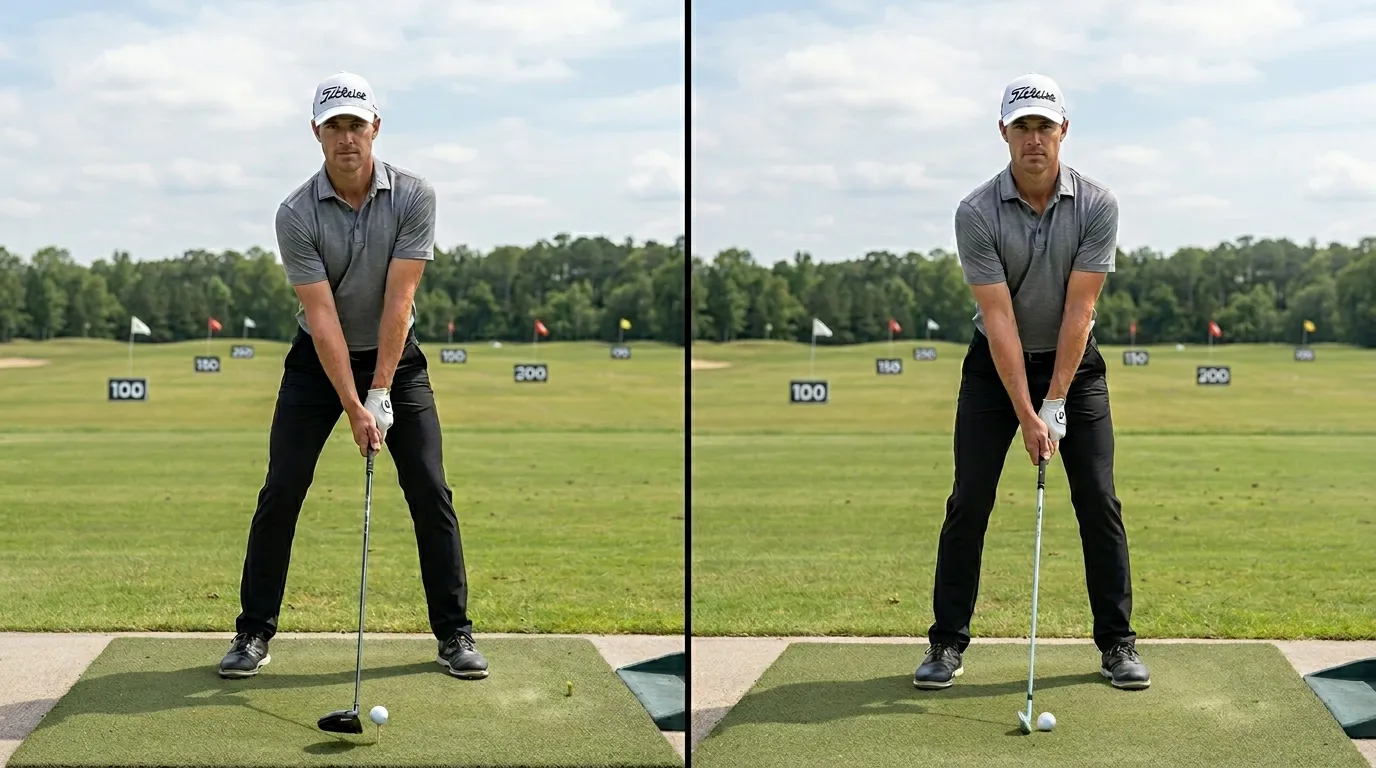
Setup is the foundation of every good swing. If your stance is wrong, even a perfect swing will struggle to produce the desired result:
Stance: Feet shoulder-width apart, weight evenly distributed between the heels and the balls of the feet
Posture: Bend from the hips, not the waist, keeping the spine straight
Grip: Both hands work as a single unit. Gripping too tightly creates tension and reduces release speed
Alignment: Feet, hips, and shoulders parallel to the target line
2. Backswing — Taking the Club Back
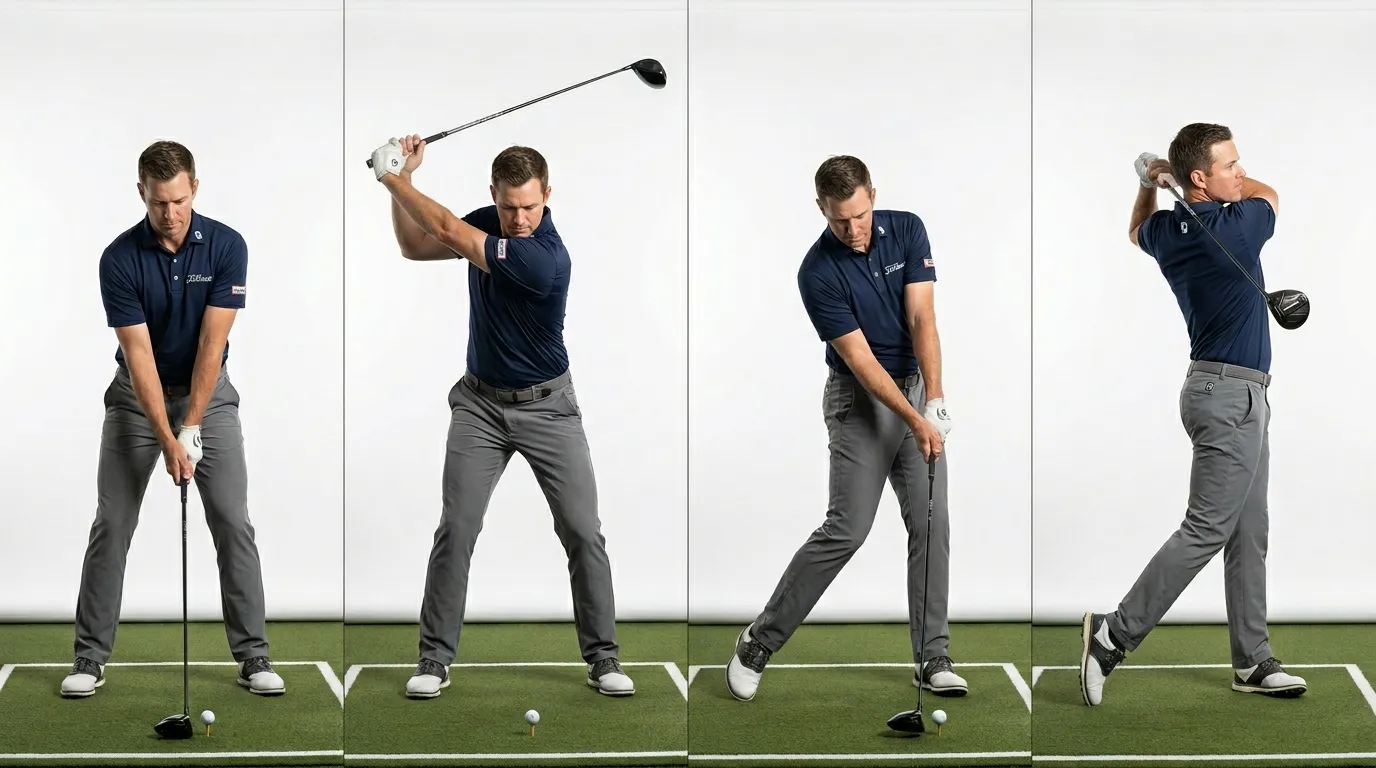
Backswing is the motion of bringing the club to the top of the arc. The shoulders rotate to create torque, the hips turn approximately 45° (less than the shoulders), and the wrists hinge naturally when the club reaches shoulder height. The club should be parallel to the target line at the top position.
3. Downswing — Bringing the Club Down
Downswing begins by pushing the lead foot into the ground, creating ground reaction force. The ideal kinematic sequence is: Feet → Hips → Torso → Arms → Club. The most common mistake is leading with the shoulders (over-the-top), which causes a slice.
4. Impact — The Moment of Contact
Impact is the moment the clubface meets the ball, lasting only about 1/2000 of a second. At this point, weight has shifted to the lead foot, the clubface is square to the target line, and the lead arm is straight.
5. Follow-Through — The Finish
A good finish indicates the swing was executed in the correct sequence: the body fully rotates toward the target, the trail heel rises due to hip rotation, and the club wraps around the shoulder in balance.
How Swings Differ for Each Club Type
There is no single swing for every situation. Players need to master these variations to adapt to course conditions:

Common Swing Faults and How to Fix Them
Fixing swing faults requires diagnosing the root cause rather than just adjusting the symptom:
Slice (ball curves to the right)
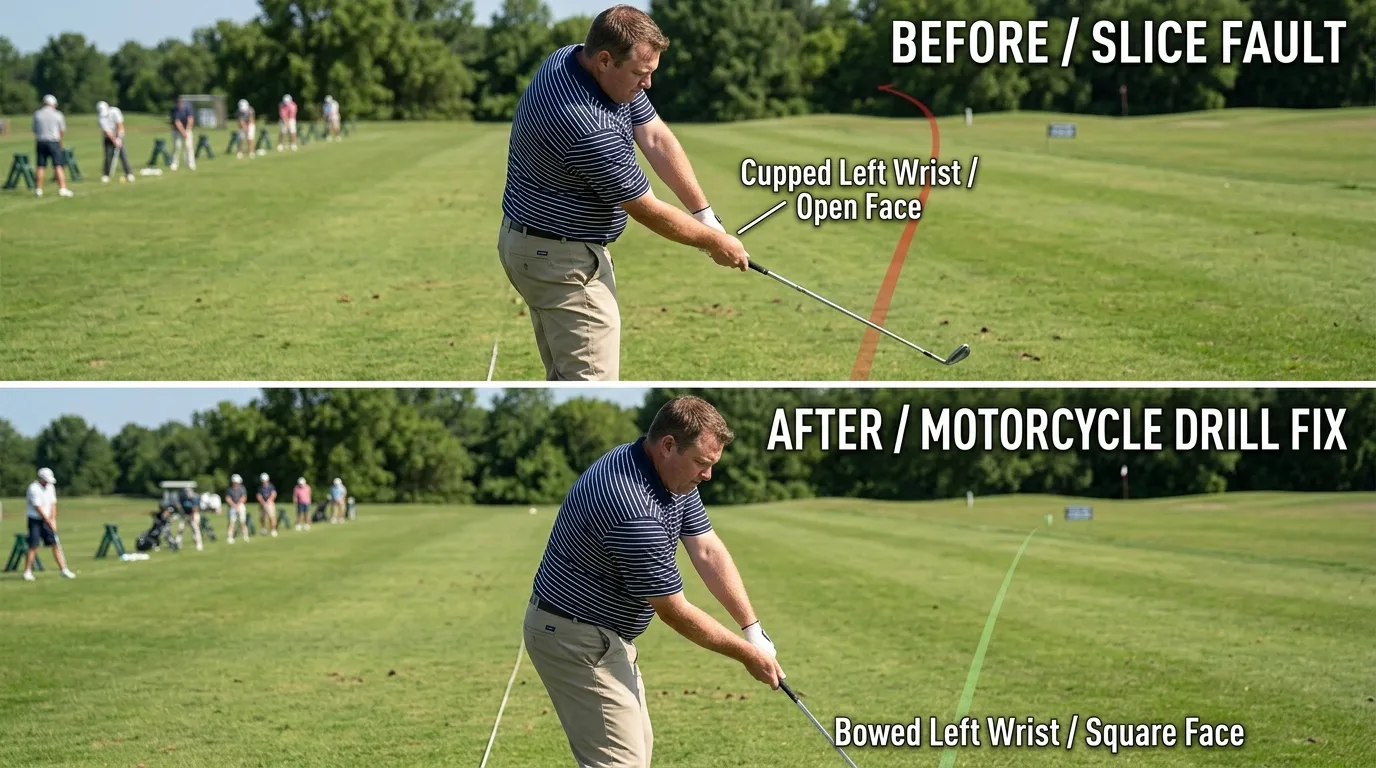
The biggest fault among amateurs, usually caused by an "over-the-top" path and an open clubface. The deep-rooted cause often lies in the lead wrist cupping during the downswing. Fix: Practice the Motorcycle Drill to create an early wrist hinge, helping to close the clubface at impact.
Hook (ball curves to the left)
Usually caused by excessive hand action or stalled hips at impact, making the clubface close too quickly. Fix: Weaken the grip slightly and ensure the hips rotate smoothly through impact.
Fat shot (hitting the ground before the ball)
Caused by weight not shifting to the lead foot in time or "casting" (releasing the club early). Fix: Keep the chest stable over the ball and feel the weight transfer to the lead foot as soon as the downswing begins.
How to Improve Your Swing
Improving your swing is not about using more arm strength, but about optimizing the kinematic sequence:
Structured Practice: Just 15–20 minutes of deliberate practice per day is more effective than mindlessly hitting hundreds of balls
Video Analysis: Record your swing to compare against the standard model
Work with a Coach: Ensure your "feel" matches the "reality" on video
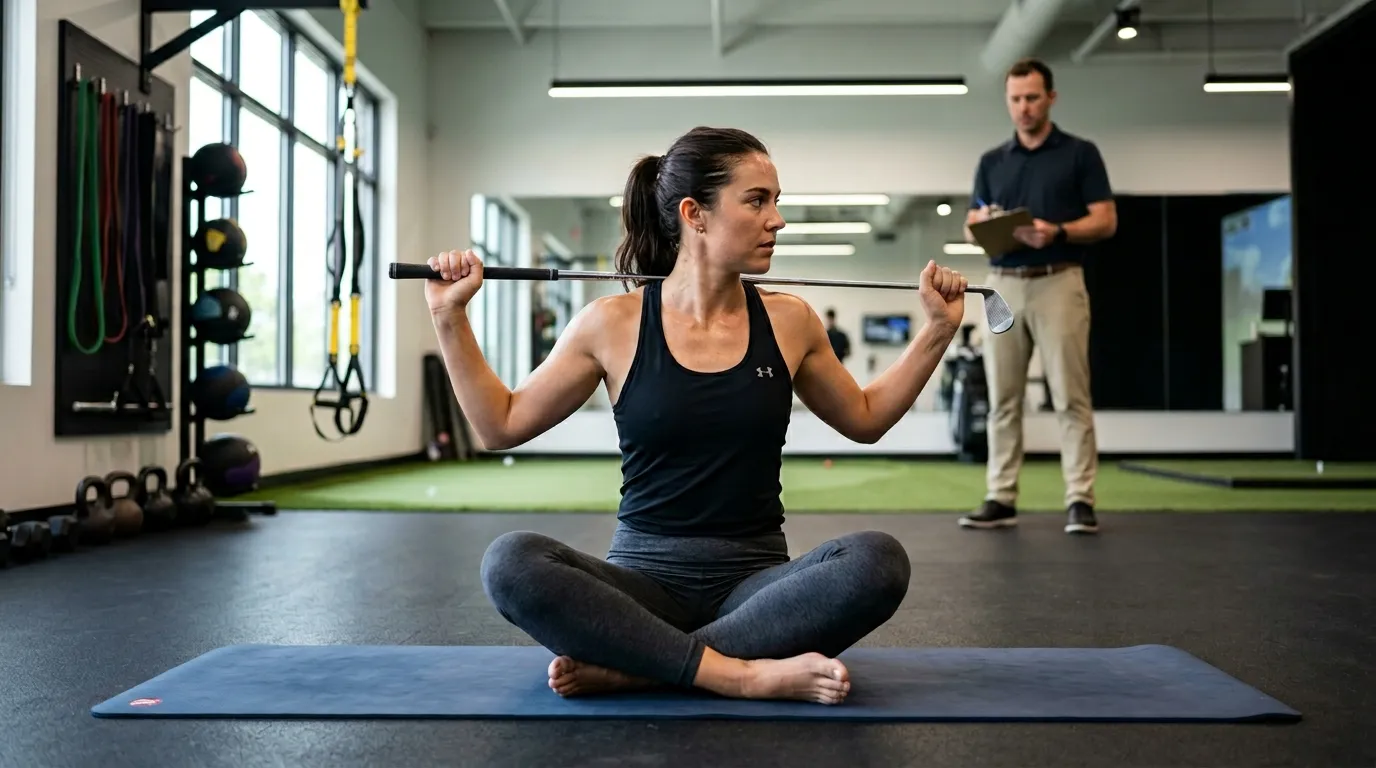
Golf-Specific Fitness: Focus on hip mobility, thoracic spine flexibility, and core strength
PGA Tip: Practice a stable half swing first, then gradually increase to a full swing. A correct half swing is better than a faulty full swing.
FAQ — Frequently Asked Questions About the Golf Swing
What is a golf swing?
A golf swing is a sequential rotational movement of the body around a stable spinal axis, designed to bring the clubhead into contact with the ball on an accurate path.
How many phases are there in a golf swing?
5 main phases: Setup (address) → Backswing → Downswing → Impact → Follow-through.
How can I make my golf swing more powerful?
It's not about arm strength — improve your kinematic sequence: start from the feet, rotate the hips before the arms move. Focus on creating effective lag rather than using brute force.
Why do I keep slicing the ball?
A slice is caused by an open clubface and an out-to-in swing path. Fix it by adjusting your grip and practicing the Motorcycle Drill to control your wrist angles.
How long should I practice my swing each day?
Just 15–20 minutes of deliberate practice per day is more effective than mindlessly hitting hundreds of balls.
Is it okay to learn the swing from YouTube videos?
Videos are a good reference tool, but they should be combined with a coach to ensure your "feel" matches "reality." Self-learning without feedback easily leads to bad habits.
How does the swing differ for each type of club?
The driver requires an upward strike (+2° to +5°), irons require a downward strike, the wedge swing is shorter, and the putter has no body rotation.
Want to practice your swing today?
WinGolf has over 50 golf courses nationwide with special green fees and fast tee time confirmation.
Read more:
References: PGA of America, USGA, TrackMan, Rotary Swing.